At Advanced Prosthodontics and Implants Esthetics in Naples, metal-free restorations are not a niche offering. They represent the direction of prosthodontic treatment at our practice, where Dr. Randold Binns has built his approach around materials that perform well clinically and look completely natural. As a surgical prosthodontist trained through Nova Southeastern University School of Dental Medicine and the University of Illinois at Chicago, Dr. Binns brings material science knowledge to every case that goes far beyond what a general dental practice provides.
What Metal-Free Materials Are Used in Modern Dentistry
The term metal-free covers several distinct material categories, and each one has a different set of strengths and ideal applications.
Zirconia is currently the most widely used all-ceramic material in prosthodontics. It is exceptionally strong, with fracture resistance that makes it well suited for posterior crowns, full-arch prosthetics, and implant-supported restorations. A systematic review published by the National Institutes of Health found zirconia offers clinical performance comparable to titanium with added esthetic and biocompatible benefits, including a lower propensity for bacterial adhesion compared to metal surfaces. For patients who prefer to avoid metal entirely, zirconia delivers the durability they need alongside the biological profile they want.
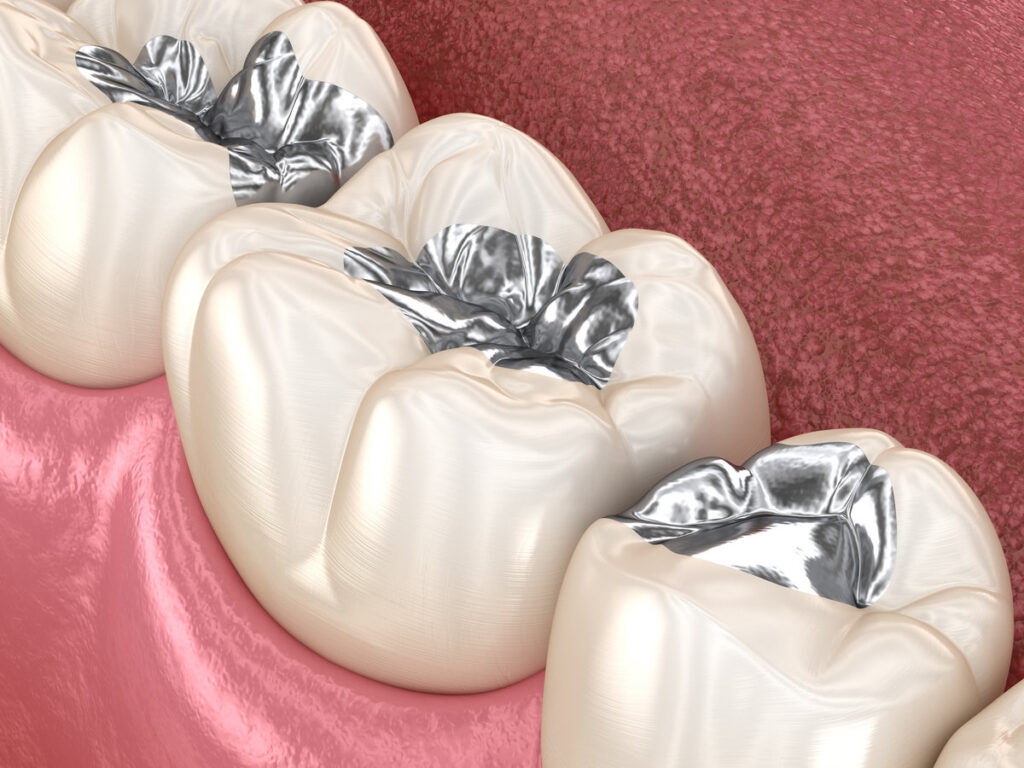
Lithium disilicate is a glass-ceramic material that excels in esthetic precision, particularly for anterior restorations where translucency and light interaction matter most. It bonds strongly to tooth structure using adhesive cementation and produces results that are genuinely difficult to distinguish from natural enamel. Modern composite resin, used for white fillings, represents the most accessible form of metal-free care. Composite bonds directly to tooth structure, requires less removal of healthy enamel than older amalgam placements, and can be precisely shaded to match surrounding teeth. For smaller restorations, it is both biologically sound and esthetically reliable.
Why Patients Are Moving Away from Metal
The shift toward metal-free materials is driven by several converging reasons, and not all of them are cosmetic. Patients today are more attentive to what goes into their bodies, and the concerns that are prompting this shift deserve a clear explanation. The most common include the following:
- Metal sensitivities: A segment of patients has documented sensitivities or allergies to the metals used in dental alloys, including nickel and cobalt. All-ceramic materials eliminate that concern entirely.
- Esthetic limitations: Porcelain-fused-to-metal crowns frequently develop a visible dark line at the gumline as patients age and gum tissue recedes, revealing the metal coping beneath the porcelain. Full-ceramic restorations have no metal substructure to betray themselves in this way.
- Light transmission: Natural teeth transmit and scatter light in a way that gives them depth. Metal-supported porcelain blocks some of that light transmission, creating restorations that look bright but flat. Zirconia and lithium disilicate interact with light much more like natural enamel, producing results that read as teeth rather than restorations.
Choosing the right material for each clinical situation means these benefits do not come at the expense of function, and that evaluation is something our practice takes seriously for every patient.
The Prosthodontic Difference in Material Selection
Selecting the right ceramic material is only part of the process. The quality of a metal-free restoration depends entirely on the precision of the tooth preparation, the accuracy of the impression or digital scan, and the clinical skill behind the final design and placement. This is where the prosthodontic background at our practice matters.
Prosthodontic training covers occlusal mechanics, material science, and esthetic design at a depth that far exceeds what general dental training covers. When we fabricate dental crowns or plan a full mouth restoration, every restoration is designed with the bite in mind. The thickness, contour, and shade of each piece must account for the forces it will bear, the space it needs to occupy, and the way it will interact visually with surrounding teeth. Dr. Binns is recognized among fellow professionals for his artistic eye and his ability to produce seamless results, and all-ceramic materials give him the full range of optical properties needed to achieve them.
Schedule a Metal-Free Restoration Consultation at Advanced Prosthodontics and Implants Esthetics
Whether you are looking to replace older metal restorations or are planning new dental work and want to explore biocompatible options from the start, Dr. Binns and our Naples team are experienced across the full spectrum of all-ceramic and glass-ceramic materials available today. Our practice has served the Naples community for over 40 years, and we take the time during every consultation to explain why a specific material is recommended for your case and what you can expect from it long-term.
To schedule your consultation with our Naples prosthodontic team, we invite you to contact our office today.