Full mouth reconstruction is one of the most demanding disciplines in all of dentistry, and it requires a clinician who understands how teeth, bone, joints, and muscles function as a connected system. At Advanced Prosthodontics and Implants Esthetics in Naples, Dr. Randold Binns approaches every reconstructive case with jaw health as a foundational consideration, not an afterthought.
How the Jaw and the Bite Are Connected
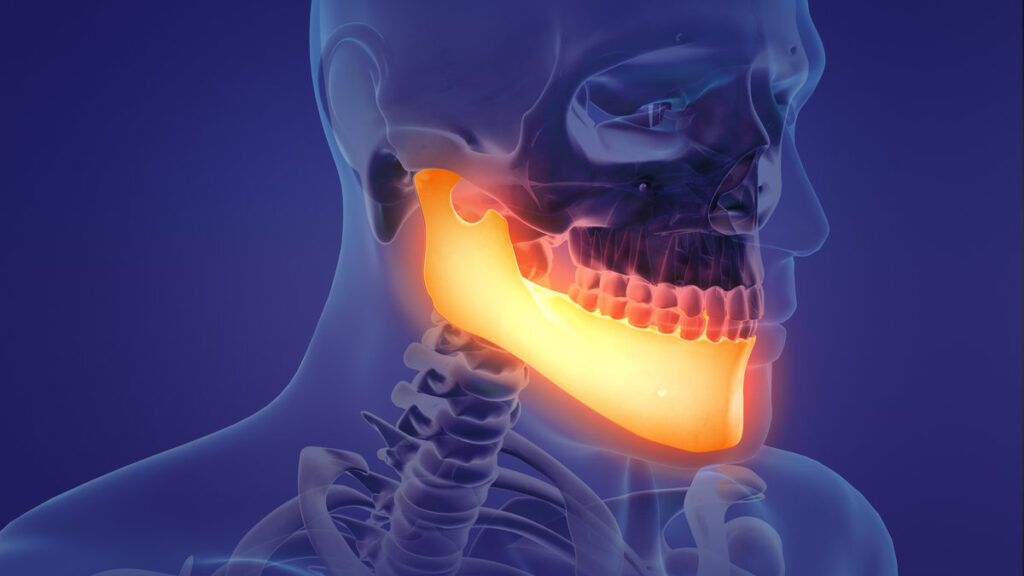
The temporomandibular joint, or TMJ, is the hinge connecting the lower jaw to the skull. It works in coordination with a network of muscles, ligaments, and discs to control every jaw movement, from speaking and chewing to swallowing and yawning. When the teeth meet, the forces generated travel through the teeth, into the bone, and ultimately load the TMJ. This means the way your upper and lower teeth come together, a concept dentists call occlusion, has a direct effect on how the jaw joint is loaded throughout the day.
When occlusion is off, whether because of missing teeth, worn-down dentition, collapsed bite height, or poorly fitted restorations, the jaw compensates. Muscles work harder, condyles shift position, and the disc inside the joint absorbs forces it was not designed to handle alone. Over time, those compensations can produce symptoms: jaw pain, clicking or popping sounds, headaches, ear discomfort, and difficulty opening the mouth fully. These are the hallmarks of temporomandibular dysfunction, or TMD, and they appear with significant frequency in patients who also need comprehensive dental reconstruction.
Why Jaw Evaluation Must Come Before Reconstruction
Research published by the National Institutes of Health confirms what experienced prosthodontists have long understood in practice: the functional longevity of prosthodontic structures depends on properly created occlusion relationships, and patients with TMJ pathology must be evaluated and stabilized before any irreversible treatment begins. Proceeding with crowns, bridges, implants, or full-arch restorations while the jaw joint is in a state of dysfunction is not just ineffective. It can actively worsen existing joint problems and destabilize the new restorations before they have the chance to serve their purpose.
This is why our team performs a thorough evaluation of jaw position, bite mechanics, and joint health before any reconstruction planning is finalized. We assess the position of the mandible at rest and in function, evaluate whether there is evidence of clenching or bruxism, review the vertical dimension of the bite, and determine whether the bite is being held in a stable position by the teeth and joints together or whether one structure is compensating for the other. Only when we have a clear picture of where the jaw sits naturally and where it needs to be for long-term stability do we begin planning restorations.
TMJ Therapy and Reconstruction Working Together
For patients who present with both TMD and the need for full-mouth rehabilitation, the treatment sequence matters enormously. TMJ therapy typically comes first, with the goal of reducing inflammation, repositioning the condyle into a stable and comfortable position, and allowing the muscles to return to their resting length. This phase often involves an occlusal splint, sometimes called a nightguard or bite guard, worn consistently over several weeks or months. The splint decompresses the joint and gives us a reliable reference point for where the mandible wants to be when the system is healthy.
Once joint stability is established, we can use that stable position as the foundation for reconstruction. Rather than building a new bite on top of a dysfunctional pattern, we are restoring form and function to a jaw that is already in its correct position. The result is a reconstruction that distributes bite forces appropriately, protects the restorations from the kind of damaging lateral stress that destroys crowns and implants over time, and feels natural because it aligns with the patient’s own anatomy.
The Prosthodontic Difference in Reconstruction Planning
Not every dental provider is trained to evaluate the relationship between jaw health and restorative outcomes. Prosthodontics is the specialty designed precisely for this kind of thinking. A prosthodontist’s advanced training covers occlusal analysis, jaw mechanics, and the long-term behavior of restorations under real-world bite forces, giving them the foundation to plan treatment that accounts for the full system rather than individual teeth in isolation.
When we fabricate dental crowns, bridges, or full-arch implant restorations at our Naples practice, each one is designed with the bite in mind. The shape and position of every contact between upper and lower teeth is deliberate, aimed at distributing forces evenly and protecting the joint from overloading. That level of precision is what separates a restoration that holds up for decades from one that needs to be replaced within a few years.
Schedule Your Full Mouth Reconstruction Evaluation at Advanced Prosthodontics and Implants Esthetics
If you have been told you need extensive dental work, or if you have been living with jaw pain, recurring restorations, or significant tooth wear, the connection between your jaw health and your reconstruction plan deserves a thorough evaluation by a specialist. Dr. Binns has spent his career navigating exactly these kinds of complex cases, bringing surgical prosthodontic training from Nova Southeastern University School of Dental Medicine and the University of Illinois at Chicago to every treatment plan we develop. Our practice has served Naples and Southwest Florida for over 40 years, and we take the time to understand the full picture of your oral health before we recommend anything.
To schedule your consultation and learn how we approach jaw health as part of every reconstruction case, contact our office today.