Dental Crowns in Naples, FL
When a Tooth Needs More Than a Filling
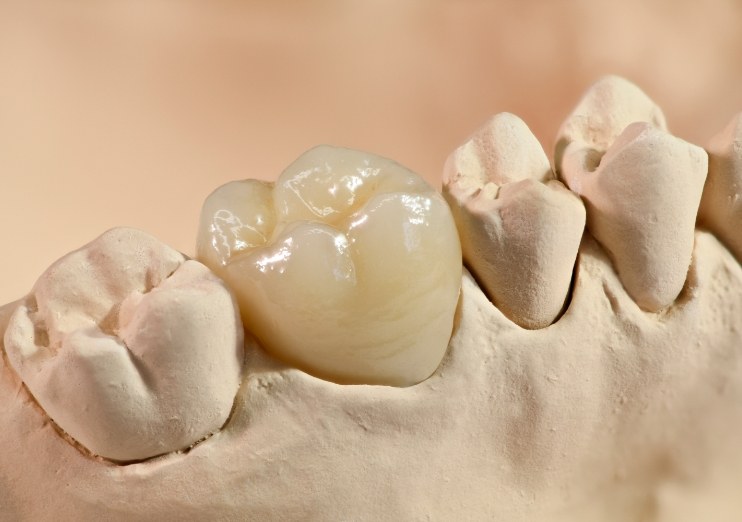
When a tooth has been damaged by decay, a crack, a fracture, or a failed restoration, a filling alone often isn’t enough to restore what was there. A dental crown encases the entire visible portion of the tooth above the gumline, rebuilding it to its original shape, protecting the remaining structure, and restoring full chewing function. Crowns also cover dental implants, anchor fixed bridges, and protect teeth that have undergone root canal treatment. In all of these situations, the outcome depends on precision — how the crown is designed, what material is selected, how the bite is calibrated.
At Advanced Prosthodontics & Implant Esthetics, dental crowns are placed by prosthodontists — the specialists whose three years of post-doctoral training focused specifically on restoring and replacing teeth. Dr. Binns and Dr. Aquino evaluate not just the damaged tooth but the entire bite system, ensuring each crown functions correctly within the broader context of how your teeth work together. The practice also works with an in-house master dental ceramist, which allows for a level of customization in color matching, texture, and proportion that most offices cannot provide.
Why Choose Advanced Prosthodontics & Implant Esthetics for Dental Crowns?
Two prosthodontists, an in-house master dental ceramist, and a practice focused entirely on restoring and replacing teeth. At Advanced Prosthodontics & Implant Esthetics, every crown is approached as a precision restoration — not a routine procedure. Dr. Binns brings meticulous aesthetic sensibility to every case, and the in-house ceramist relationship means the color matching, texture, and surface characterization of each crown are handled with a level of craftsmanship that distinguishes this practice from offices that outsource laboratory work. Patients who need crowns as part of larger restorative plans — including implant cases and full-mouth reconstruction — benefit from having all phases managed within the same practice.
When You Might Need a Crown
A crown is indicated when decay is too extensive for a filling to adequately restore the tooth, when a tooth is cracked or fractured and the break extends below where a filling can hold, after root canal treatment when the remaining tooth structure is compromised, to cover and protect a dental implant post, to anchor either end of a fixed dental bridge, or to restore a tooth worn down to the point where normal function is impaired. The common thread in all of these situations is that the tooth needs full encasement — not just a partial repair.
How Prosthodontists Approach Crown Treatment
Prosthodontists evaluate crown cases differently from general dentists because the training is different. Three additional years of post-doctoral specialty education — focused entirely on restoring and replacing teeth — produces a diagnostic framework that accounts for the full bite system: how teeth contact, how forces distribute across the arch, what the long-term functional demand on each restoration will be. A crown placed without that evaluation may look fine at delivery and fail prematurely because it was calibrated to the wrong bite position, or absorb forces it was never designed to handle.
At our Naples practice, material selection is made based on where the tooth is in the arch, how much force it absorbs during chewing, and the aesthetic goals of the patient. Posterior teeth that take heavy chewing loads may be better served by zirconia; anterior teeth where translucency and appearance matter more may call for layered porcelain. That decision isn’t made by protocol — it’s made case by case, with the laboratory working from detailed prescriptions rather than generic orders.
The Crown Process
Crown placement at our practice requires two appointments, typically separated by two to three weeks.
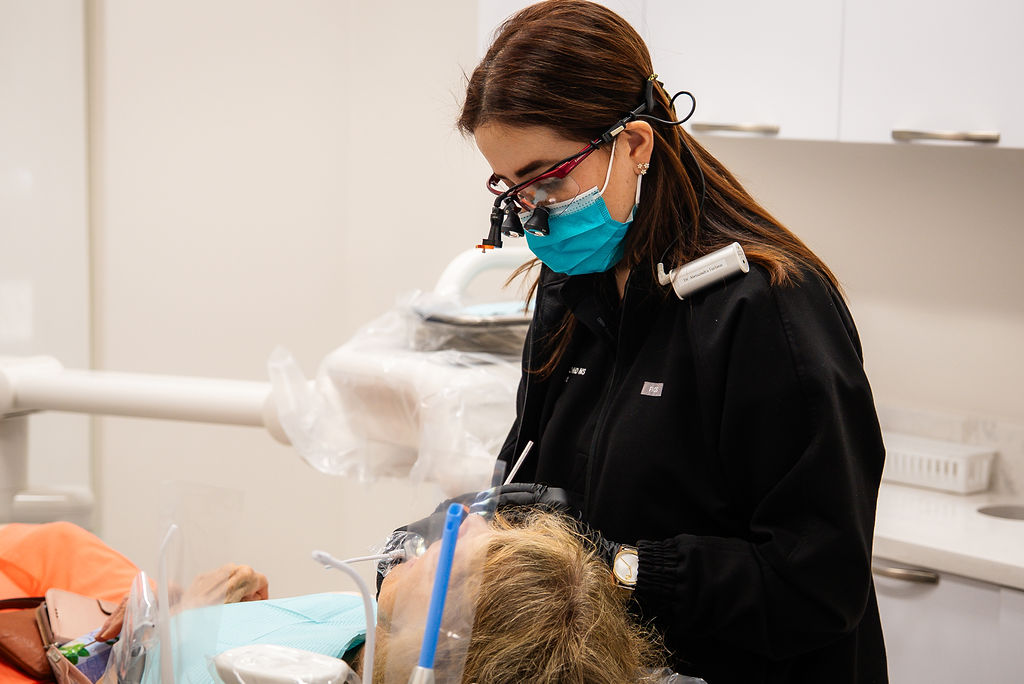
Appointment 1 — Preparation (60–90 minutes): The tooth is numbed with local anesthetic and prepared by removing damaged structure and reshaping it to receive the crown. Detailed impressions and shade records are taken and sent to our in-house ceramist. A temporary crown is placed to protect the tooth while the permanent restoration is fabricated.
Appointment 2 — Delivery (30–60 minutes): The permanent crown is tried in, adjusted for fit and bite, and cemented. Most patients leave comfortable and fully functional the same day.
From first appointment to final delivery, the total timeline is typically three to four weeks. Patients who need a crown as part of a larger treatment plan — such as implant restoration or full-mouth reconstruction — may have a longer coordinated schedule, which is discussed in detail during the consultation.
Metal-Free Restorations
Every restoration placed at our Naples practice is metal-free. We work exclusively with ceramic and zirconia materials because they match natural tooth color, require no concessions to aesthetics, and have achieved the mechanical strength needed for all clinical situations including high-load posterior teeth. Zirconia is particularly well-suited for patients who grind, for back teeth that absorb significant chewing force, and for implant-supported crowns. Layered porcelain is used where translucency and lifelike surface texture are the priority. For patients who have older metal-containing crowns that are failing, replacement with ceramic options is available when clinically appropriate.
Making Treatment Accessible
As a fee-for-service specialty practice, we do not participate in insurance networks, though we file claims on your behalf so you receive applicable out-of-network reimbursement. Many dental plans cover a portion of crown costs when the crown is deemed medically necessary — typically when the tooth has significant structural damage, has undergone root canal treatment, or is being restored as part of an implant case. Purely cosmetic crowns are typically not covered. CareCredit financing is available to manage costs over time. We discuss cost and coverage at your consultation so you have a clear picture before treatment begins. To schedule your evaluation, reach out through our contact page.
Schedule Your Crown Consultation with Advanced Prosthodontics and Implants Esthetics
Damaged teeth don’t stabilize on their own — decay continues, cracks propagate, and the window for a straightforward restoration narrows over time. Dr. Binns and Dr. Aquino evaluate each case with full bite and structural analysis so the crown you receive functions correctly for years, not just at delivery. If you’re experiencing tooth pain, have a visible crack or fracture, know you have a tooth that has been heavily filled or root-canal treated, or want to replace an older metal restoration, our Naples office is the right starting point. Reach out through our contact page to schedule your consultation.
Frequently Asked Questions
What is a dental crown?
What materials are dental crowns made from?
How long does a dental crown last?
How much do dental crowns cost in Naples, FL?
Can I get a dental crown in one day?
Does getting a dental crown hurt?
When is a dental crown necessary?
What is the difference between a dental crown and a veneer?
Let Our Patients
Tell Our Story
More to Explore
VISIT US IN NAPLES
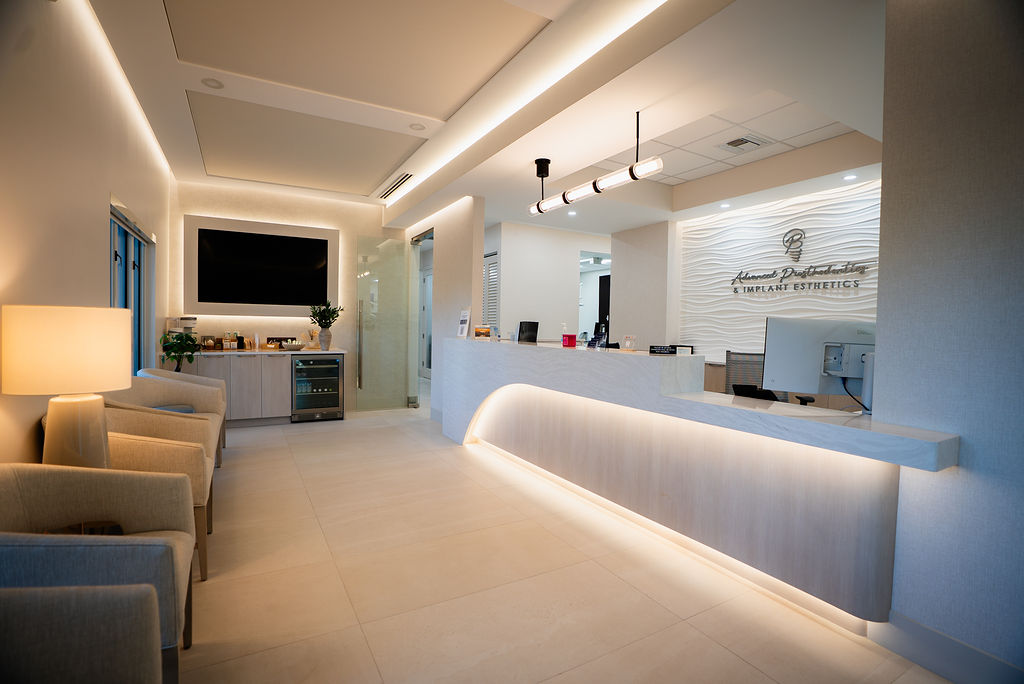
Experience personalized care from Southwest Florida’s leading prosthodontic specialists. Our state-of-the-art facility is equipped with the latest digital technology to ensure precise, comfortable treatment.
✓ Complimentary consultations for dental implants and full-mouth reconstruction
✓ Flexible financing options with payments as low as $150/month
✓ Convenient location in the heart of Naples with ample parking
Book Your Appointment Today
Don’t wait to take control of your oral health. Schedule your implant consultation at Advanced Prosthodontics & Implant Esthetics. Our bilingual practice serves both English and Spanish-speaking patients throughout Southwest Florida.